
Lifetime of LED: A Comprehensive Guide to Optimal Usage
- 2024-03-05 14:39
- UNITOP
You walk into the hardware store and see the promise: "50,000-hour lifespan!" on the LED bulb packaging. That's nearly 17 years if you use it 8 hours a day. Yet three years later, you're replacing the same bulb. Sound familiar?
The disconnect between advertised LED lifetime and real-world performance frustrates homeowners and businesses alike. The truth is, LED lifetime isn't about when the light stops working—it's about understanding lumen maintenance, testing standards, and the factors that actually determine how long your LEDs will last.
This guide explains what LED lifetime really means, how it's measured through L70 ratings and industry standards, and most importantly, how you can maximize the lifespan of your LED investments.
What is LED Lifetime?
LED lifetime is the operating hours until an LED's light output decreases to 70% of its initial brightness, known as the L70 rating. Unlike traditional bulbs that burn out suddenly, LEDs gradually dim over time through a process called lumen depreciation.
This fundamental difference changes how we think about bulb replacement. An incandescent bulb gives you clear signals—a flicker, a pop, then darkness. An LED can continue emitting light for years after reaching its rated lifetime, just at reduced brightness.
The 70% threshold exists for a practical reason: the human eye typically notices brightness reduction once lumen output drops by 30% or more. At this point, the LED is considered "end-of-life" by manufacturers, even though it technically still functions.
For a Nichia LED with a 60,000-hour lifetime, this means the bulb maintains at least 70% of its original brightness for 60,000 hours of operation. After that point, it might continue working for another 140,000 hours—potentially reaching 200,000 total hours—but at increasingly diminished output.
Understanding L70, L80, and Lumen Maintenance
What L70 Really Means
L70 represents the point where an LED produces 70% of its initial light output. If an LED starts at 1,000 lumens, it reaches L70 when output drops to 700 lumens. The number following L70 indicates the hours required to reach this threshold.
For example, "L70 at 50,000 hours" means the LED maintains 70% brightness for 50,000 operating hours. This has become the industry standard benchmark because it balances practical usability with measurable decline.
The LxBy Rating System
Beyond basic L70, the industry uses a more nuanced LxBy rating system. "L" indicates the lumen maintenance percentage, while "B" represents the acceptable failure rate.
L90B10 at 50,000 hours means that after 50,000 hours, 90% of LEDs maintain at least 90% of their initial brightness. Only 10% fail to meet this threshold, either through complete failure or excessive dimming.
Compare this to L70B50 at 50,000 hours: only 50% of LEDs maintain 70% brightness at 50,000 hours, while the other 50% have failed or dimmed further. An L90B10 product clearly outlasts an L70B50 product, even if both claim "50,000-hour lifetimes."
Beyond L70: L80 and L50 Explained
Different applications demand different standards. Safety-critical installations like hospital operating rooms or emergency exits often require L90 or L80 ratings, where even 20-30% brightness loss is unacceptable.
Conversely, warehouses or storage areas might accept L50 ratings—operating until only 50% of initial brightness remains—in cost-sensitive applications where dramatic dimming is tolerable.
The rating you need depends on your specific use case. Retail displays showing products need consistent color and brightness (L90). Street lighting can often function acceptably at L70. Decorative outdoor lighting might work fine at L50.
How LED Lifetime is Tested: LM-80 and TM-21 Standards
LM-80 Testing Process
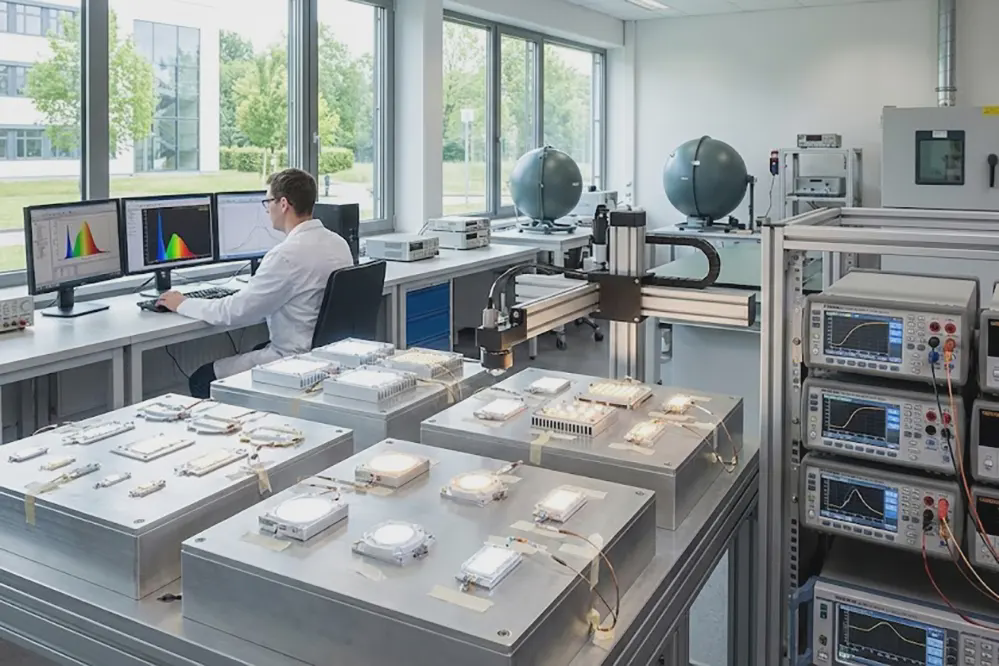
IES LM-80, "Measuring Lumen Maintenance of LED Light Sources," is the industry standard for testing LED lumen depreciation. Testing laboratories measure LED luminous flux at regular intervals—typically every 1,000 hours—over test periods of 6,000 to 10,000 hours.
Multiple LEDs undergo simultaneous testing at different drive currents and temperatures (commonly 55°C, 85°C, and an optional third temperature). This produces degradation curves showing how brightness changes under various operating conditions.
The LM-80 test captures real performance data, but it doesn't directly predict lifespan. Testing for the full claimed lifetime is impractical—a 60,000-hour test would take nearly seven years.
TM-21 Projections
IES TM-21 bridges this gap by projecting long-term lumen maintenance from LM-80 data. Engineers plot an exponential curve through the measured data points, extending the graph to predict when the LED will reach 70% brightness.
However, TM-21 includes a critical limitation: projections can extend only six times the actual test duration. A 6,000-hour LM-80 test allows projection to 36,000 hours maximum, denoted as "L70 (6K) >36,000 hours." A 10,000-hour test permits projection to 60,000 hours: "L70 (10K) >60,000 hours."
This six-times rule ensures conservative estimates. Real-world performance often exceeds projections, but manufacturers cannot claim longer lifetimes without extended testing.
Why 50% of Lifetime Claims Are Inaccurate
A Department of Energy study found lifetime claims for more than half of LED products to be inaccurate or miscalculated. Some manufacturers manipulate LM-80 data to generate favorable projections. Others selectively apply TM-21 requirements or simply invent impressive numbers.
Street lights claiming 150,000, 200,000, or even 300,000 hours to L70 reveal the problem. That last figure translates to more than 34 years of continuous operation—or 68 years at 12 hours daily. Some LED lifetime claims now exceed average human life expectancy.
The industry's rapid evolution compounds the issue. Manufacturers develop new LEDs faster than testing can verify performance claims, creating a gap between promises and proven results.
The Real Culprit: Why LEDs Fail Before Their Rated Life
LED Chips vs. LED Drivers
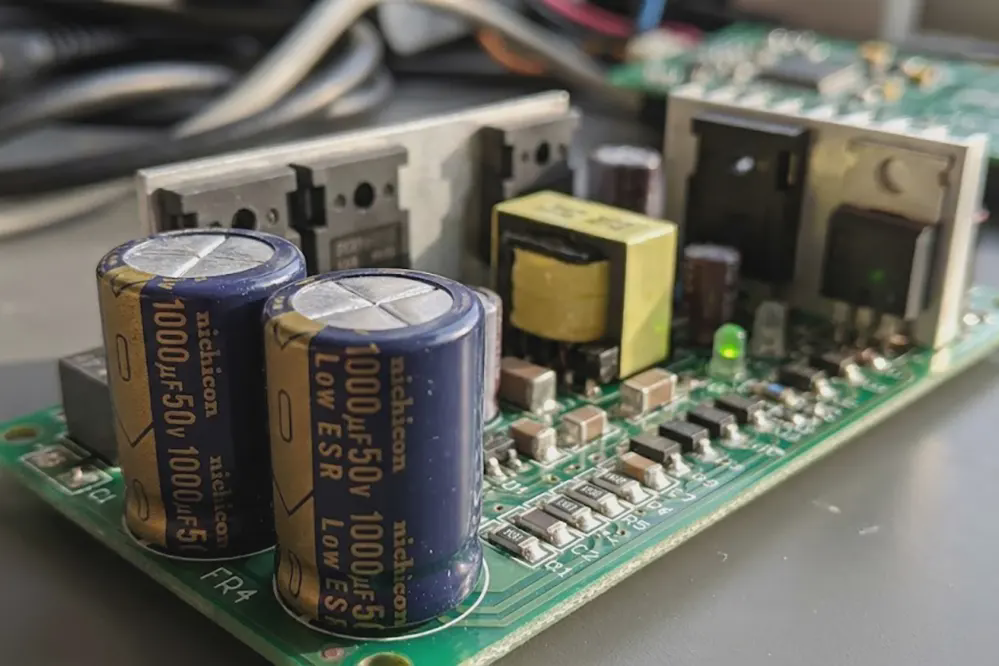
Here's the uncomfortable truth: LED chips themselves can last close to 100,000 hours when operated correctly. The actual weak link is the driver—the electronic component converting AC power from your wall to the DC power LEDs require.
Analysis of 5,400 outdoor LED lamps over 34 million operating hours revealed that LED chips accounted for only 10% of failures. Driver circuitry caused almost 60% of failures, with housing problems comprising the remainder.
This creates a fundamental mismatch. Your LED chip might survive for decades, but the driver circuitry fails in 3-5 years, killing the entire fixture.
Component Failure Points
Inside every LED driver sit electrolytic capacitors and semiconductors—components with temperature-sensitive lifespans. Electrolytic capacitors, necessary for power regulation, typically have low tolerance for elevated temperatures.
When you see an LED bulb flicker or fail completely, that's usually driver failure, not LED chip failure. LED chips don't typically fail suddenly; instead, they gradually dim throughout their lifespan.
Compact LED retrofit designs (Edison screw, bayonet, GU10, MR16 fittings) face particular challenges. The volume constraints of these designs limit optimal component selection and thermal management. They also become unserviceable when the driver fails—the entire bulb becomes trash.
The Heat Factor
Temperature control determines LED longevity. For every 10°C increase in junction temperature, LED lifespan drops by approximately 50%.
Real testing data illustrates this dramatically: LEDs operating at 85°C junction temperature have an estimated L70 lifespan of only 25,000 hours, compared to 50,000 hours at 65°C. That 20-degree difference cuts lifespan in half.
High temperatures accelerate degradation of both the LED chip and internal driver components. Prolonged heat exposure compromises structural integrity and reliability of the entire fixture.
Heat management presents a dual challenge: internal heat from electrical inefficiency plus external heat from the surrounding environment. Effective heat dissipation requires high-quality aluminum heat sinks, optimized airflow design, and proper ventilation.
5 Key Factors That Affect LED Lifetime
1. Operating Temperature
Temperature stands as the single most critical factor affecting LED longevity. The junction temperature—where the LED chip connects to its mounting surface—directly correlates to lifespan.
Heat sinks draw heat away from LED chips through thermal conduction. Quality matters enormously. High-grade aluminum heat sinks with optimized fin designs dramatically outperform budget alternatives.
Fixture selection impacts temperature significantly. Enclosed fixtures trap heat, creating hotspots that accelerate degradation. Open fixtures or those designed specifically for LED use with ventilation holes allow heat to dissipate naturally.
Even fixture orientation matters. An LED bulb installed base-up in an enclosed pendant traps heat in the fixture. The same bulb in an open ceiling can fixture performs significantly better.
2. Drive Current and Voltage
Operating LEDs above their recommended current increases light output temporarily but drastically shortens lifespan. The relationship is exponential, not linear—small current increases cause disproportionate lifetime reductions.
Power surges from grid switching, equipment startups, or lightning strikes can damage drivers instantly. Quality LED products include surge protection, but budget options often skip this critical safeguard.
Voltage stability matters too. Frequent voltage fluctuations stress driver components, accelerating wear. While modern LEDs handle typical variations, extreme or sustained voltage problems reduce lifespan.
Interestingly, frequent on-off switching has minimal impact on modern LED drivers, unlike older lighting technologies. The bigger enemy remains sustained heat, not switching cycles.
3. LED Quality and Manufacturing
Component quality varies dramatically between manufacturers. High-quality LEDs from Nichia, Samsung, Seoul, or Cree use superior phosphor coatings, better chip designs, and more reliable solder connections.
The purple streetlight phenomenon—where LED streetlights turn purple after a few years—demonstrates phosphor layer degradation from poor manufacturing quality. Quality phosphor coatings maintain color stability for decades.
Internal build quality is difficult for consumers to assess visually. Look for comprehensive LM-80 and TM-21 test reports from independent laboratories. Certifications like UL listing, DLC qualification, or Energy Star verification indicate proper testing.
Long warranties signal manufacturer confidence. A 5-year warranty suggests the manufacturer believes their product will last. A 90-day warranty suggests they know it won't.
4. Installation and Environment
Proper installation supports optimal LED performance. Using correct wiring prevents voltage surges or drops that damage components. Ensuring adequate space for heat dissipation prevents thermal buildup.
Environmental conditions extend beyond temperature. Extreme cold affects startup time and efficiency in fixtures not designed for low-temperature operation. Prolonged moisture exposure causes corrosion, particularly in fixtures lacking proper sealing.
Dusty environments present unique challenges. Accumulated particles form an insulating layer trapping heat, leading to overheating. Industrial environments with harsh chemicals like ammonia, chlorine, or solvents can degrade housings and internal components.
Vibration and shock in industrial settings or on vehicles accelerate failure of both LEDs and drivers. Fixtures designed for these applications include reinforced mounting and shock-absorbing components.
5. Usage Patterns
Usage duration affects when LEDs reach their rated lifetime. An LED operated 24 hours daily reaches 50,000 hours in 5.7 years. The same LED used 3 hours daily lasts 45 years before reaching 50,000 hours.
However, real-world lifespan typically ranges 4-6 years regardless of usage pattern, because other failure modes—particularly driver failure—intervene before the LED chips themselves degrade significantly.
Application matters. Continuous-use applications like commercial facilities running 12-16 hours daily benefit from high-quality drivers designed for extended operation. Residential applications with intermittent use can accept lower-grade components because the lower duty cycle reduces thermal stress.
Maximizing LED Lifetime: Best Practices
Proper Installation
Select fixtures designed specifically for LED use. Traditional fixtures designed for incandescent bulbs often lack adequate ventilation for LED heat dissipation.
Avoid enclosed fixtures unless the LED is specifically rated for enclosed use. Even then, expect reduced lifespan compared to open fixtures.
Match LED wattage to fixture ratings. Using higher-wattage LEDs than a fixture is designed for causes overheating and premature failure.
Heat Management Strategies
Ensure adequate airflow around LED fixtures. In tight spaces, consider fixtures with built-in cooling fans or heat pipes for enhanced thermal management.
Position fixtures to promote natural convection. Heat rises—mounting fixtures where hot air can escape naturally improves cooling.
In hot environments, choose LEDs rated for high ambient temperatures. Industrial-grade LEDs designed for 40-50°C ambient temperatures last longer in hot climates than standard residential LEDs rated for 25°C.
Power Quality Protection
Install surge protectors on critical lighting circuits. This is particularly important for outdoor lighting exposed to lightning strikes or for facilities with large motors that create voltage spikes during startup.
Ensure stable voltage supplies. If voltage fluctuations are common in your area, consider voltage regulators for sensitive LED installations.
Use compatible dimmers. Not all LEDs work with all dimmer types. Incompatible dimmers cause flickering, buzzing, and reduced lifespan. Look for LEDs specifically labeled "dimmable" and match them with recommended dimmer types.
Maintenance and Care
Regular cleaning prevents dust accumulation that traps heat. Wipe fixtures with a dry cloth monthly in dusty environments.
Inspect fixtures annually for signs of degradation: discoloration, dimming, color shift, or flickering. Early replacement prevents complete failure during critical operations.
Monitor for early warning signs: noticeable dimming before expected end-of-life, color temperature shift, or intermittent flickering all suggest impending failure.
LED Lifetime vs. Traditional Lighting
Incandescent bulbs last approximately 1,000 hours before the filament burns out completely. At 3 hours daily use, that's less than one year. The failure is catastrophic and immediate—the bulb works perfectly until it doesn't.
Compact fluorescent lamps (CFLs) extend lifespan to 6,000-8,000 hours. They experience both gradual dimming and eventual burnout, typically failing after 2-3 years of regular use. They also contain mercury, creating disposal challenges.
LED bulbs rated at 25,000-50,000 hours should last 7-17 years at typical residential usage. The failure mode is gradual dimming rather than sudden burnout, though driver failure can cause catastrophic failure earlier than expected.
Cost-per-hour analysis favors LEDs dramatically. An incandescent bulb costs perhaps $1 but provides only 1,000 hours. An LED costs $5-10 but provides 25,000-50,000 hours. The LED delivers 25-50 times more light hours per dollar, plus energy savings during operation.
Real-World Expectations: Converting Hours to Years
Manufacturers rate LEDs in operating hours, but consumers think in years. The conversion depends entirely on daily usage.
50,000 hours at 3 hours daily = 45 years
50,000 hours at 8 hours daily = 17 years
50,000 hours at 12 hours daily = 11 years
50,000 hours at 24 hours daily = 5.7 years
However, actual lifespan typically ranges 4-6 years regardless of usage pattern. Why? Driver failure intervenes. The electronic components simply don't last as long as the LED chips themselves.
This creates realistic expectations: a quality LED in a residential setting should last 5-10 years. A commercial LED operating 12-16 hours daily should last 3-6 years. Budget LEDs might fail in 2-3 years.
Setting accurate expectations prevents disappointment. Don't plan for the 50,000-hour theoretical maximum. Plan for 5-7 years of actual service, and anything beyond that is a bonus.
Application-Specific Lifetime Considerations
Commercial and Industrial
Commercial installations prioritize reliability and maintenance scheduling. Color consistency matters—a retail store can't have some fixtures noticeably dimmer than others.
Plan replacement before reaching L70. For critical applications, replace at L80 or L90 to maintain consistent light levels across the facility.
Track fixture installation dates. Replace fixtures proactively on a schedule rather than reactively after failure disrupts operations.
Residential Use
Homeowners can often continue using LEDs past L70. A living room lamp that's 30% dimmer might still provide adequate light, while a reading lamp demands full brightness.
Consider application when deciding replacement. Security lighting needs full brightness; decorative accent lighting can tolerate dimming.
Calculate true cost of replacement. Sometimes a slightly dimmed LED costs less to keep running than buying and installing a replacement, even considering reduced light output.
Outdoor and Harsh Environments
Outdoor LEDs face temperature extremes, moisture, UV exposure, and potentially corrosive environments. Choose fixtures rated for outdoor use with appropriate IP ratings (IP65 or higher for wet locations).
Cold weather affects LED startup and driver performance. Fixtures rated for -40°C operation outperform standard fixtures in northern climates.
Marine environments or locations near pools require corrosion-resistant fixtures made from low-copper aluminum or stainless steel. Standard aluminum fixtures corrode rapidly in salt air.
FAQ
Q1: Does a 50,000-hour rating mean the LED stops working?
No. The L70 rating means the LED maintains at least 70% of its original brightness for 50,000 hours. After that point, the LED continues functioning but produces less light. Complete failure can occur from driver issues, but the LED chip itself typically continues emitting light for much longer than its rated lifetime.
Q2: Why did my LED fail after only 2 years when it was rated for 50,000 hours?
Driver failure is the most common cause. LED drivers convert AC power to DC and regulate current, but their components—particularly electrolytic capacitors—are heat-sensitive and typically fail before the LED chips. Other causes include excessive heat from poor ventilation, power quality issues like voltage spikes, or simply a low-quality product with inaccurate lifetime claims.
Q3: How can I tell when an LED needs replacement?
Watch for noticeable dimming compared to when new, color shift toward blue or yellow tones, flickering or intermittent operation, or complete failure. In commercial settings where consistent light levels matter, consider replacing at L80 (80% brightness) rather than waiting for obvious dimming.
Q4: Do LEDs last longer if I turn them off when not in use?
Yes, though the benefit isn't as dramatic as with incandescent bulbs. Modern LEDs handle frequent switching well—the on-off cycle isn't the problem. However, less total operating time means less heat exposure and slower progression toward end-of-life. The bigger impact comes from managing heat during operation rather than reducing total runtime.
Q5: What's the difference between LED lifetime and driver lifetime?
LED chips can theoretically last 100,000+ hours under ideal conditions. LED drivers—the electronics converting AC to DC power—typically limit overall system lifetime to 25,000-50,000 hours because their components degrade faster. Think of it like a car: the engine might run for 300,000 miles, but the transmission fails at 150,000 miles. The whole vehicle is limited by the weakest component.
Conclusion
LED lifetime is more nuanced than the simple hour ratings printed on packaging. The L70 standard provides a meaningful benchmark—the point where brightness drops to 70% of original output—but real-world performance depends on factors from heat management to driver quality.
Quality LEDs from reputable manufacturers, properly installed in well-ventilated fixtures with stable power, can deliver close to their rated lifetimes. Budget LEDs in enclosed fixtures with poor thermal management might fail years before their claimed ratings.
Maximize your LED investments by choosing quality products with comprehensive LM-80 and TM-21 testing data, ensuring proper installation with adequate cooling, protecting against power quality issues, and maintaining fixtures to prevent heat-trapping dust buildup.
Set realistic expectations: plan for 5-7 years of service in typical applications rather than the theoretical maximum. Even with perfect conditions, driver components limit practical lifetime to well below the LED chips' theoretical potential.
Understanding what LED lifetime actually means—and what factors truly affect it—helps you make informed lighting decisions that deliver reliable, long-lasting performance.